For parents and carers, it can be easy to think of play as simply a way to keep children busy. In reality, every climb, jump, crawl, stretch and shuffle helps children understand what their bodies can do.
Gross motor skills are the larger movements children make using their arms, legs and whole body. These include running, climbing, balancing, jumping and crawling. Soft play is a brilliant environment for developing these skills because children can move freely in a safe, padded space.
When children climb up steps, crawl through tunnels or balance across play equipment, they are strengthening their muscles and improving control over their movements. These activities also help children build stamina, which is important for everyday tasks such as walking, playing outdoors, joining in with sports and taking part in school activities.
Balance and coordination are key parts of physical development. Children need these skills for everything from getting dressed and carrying a tray to riding a bike or kicking a football.
In a soft play setting, children are constantly practising coordination without even realising it. They might climb up one section, crawl under another, slide down, then run back to do it all again. These repeated movements help the brain and body work together more effectively.
For younger children, even small challenges such as stepping over soft blocks or walking across different surfaces can help them become more confident movers.
Physical development is not just about big movements. Fine motor skills, which involve smaller movements in the hands and fingers, are also important. Children use these skills when they draw, build, fasten buttons, feed themselves and eventually write.
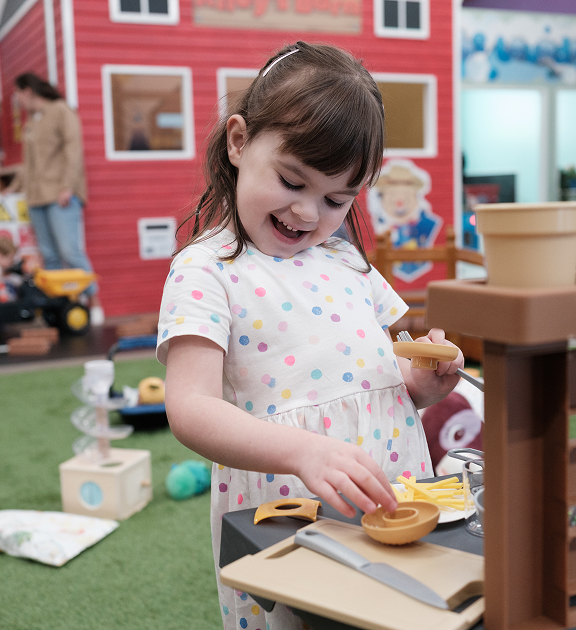
Play activities such as role play, building, sorting, stacking and handling small play items can support fine motor control. Pretend kitchens, shops, tools, dolls, vehicles and dressing-up items all encourage children to grip, twist, pour, pick up and place objects carefully.
These small actions may seem simple, but they play an important role in helping children gain independence.
As children grow, they begin to test their own abilities. They may wonder if they can climb a little higher, balance for a little longer or try a slide they have not used before. Safe play environments give children the chance to explore these challenges at their own pace.
When a child masters a new physical skill, it can have a big impact on their confidence. They begin to trust their body, understand their limits and feel proud of what they can achieve.
This kind of confidence often carries into other areas of life, including school, friendships and trying new activities.
Children naturally have lots of energy, and active play gives them a healthy outlet. Regular movement helps support fitness, sleep, mood and concentration. After a busy soft play session, many children feel calmer because they have had the chance to move, explore and release energy.
Indoor play can be especially helpful during colder or rainy days when outdoor time is limited. It gives children the space to be active, even when the weather is not on your side.
One of the lovely things about play is that it changes as children grow. A baby may start by exploring textures and movement. A toddler may practise crawling, climbing and balancing. Older children may create games, challenge themselves physically and play alongside friends.
Whether children are racing through soft play, creating stories through role play or building confidence one small climb at a time, play is doing far more than keeping them entertained. It is helping their bodies grow stronger, more coordinated and more capable every day.